Info Security Memo
  • Blog
  • Sitemap
    • Categories
  • Contact
  • About
  • Resources
  • Tools
  • 51sec.org

Build Confidence

Focusing on Information Security 

Info Security Notes

Set Up IPSec Site to Site VPN Between Fortigate 60D (4) - SSL VPN

4/22/2015

1 Comment

 
IPSec Site to Site VPN Configuration Series:
  1. Set Up IPSec Site to Site VPN Between Fortigate 60D (1) - Route-Based VPNs
  2. Set Up IPSec Site to Site VPN Between Fortigate 60D (2) - Policy-Based VPNs
  3. Set Up IPSec Site to Site VPN Between Fortigate 60D (3) - Concentrator and Troubleshooting
  4. Set Up IPSec Site to Site VPN Between Fortigate 60D (4) - SSL VPN
SSL VPNs establish connectivity using SSL, which functions at Levels 4 - 5 (Transport and Session layers). Information is encapsulated at Levels 6 - 7 (Presentation and Application layers), and SSL VPNs communicate at the highest levels in the OSI model. SSL is not strictly a Virtual Private Network (VPN) technology that allows clients to connect to remote networks in a secure way.

FortiOS supports the SSL (not SSL1.0) and TLS (TLS1.3) versions defined below:

Defined
Protocol Year
SSL 1.0 n/a
SSL 2.0 1995 - RFC 6176
SSL 3.0 1996 - RFC 6101
TLS 1.0 1999 - RFC 2246
TLS 1.1 2006 - RFC 4346
TLS 1.2 2008 - RFC 5246
TLS 1.3 TBD


When a remote client connects to the FortiGate unit, the FortiGate unit authenticates the user based on username, password, and authentication domain. A successful login determines the access rights of remote users according to user group. The user group settings specify whether the connection will operate in web-only mode or tunnel mode. There are three types of mode:
  1. Web-only Mode
  2. Tunnel Mode
  3. Port Forwarding Mode (Proxy Mode)


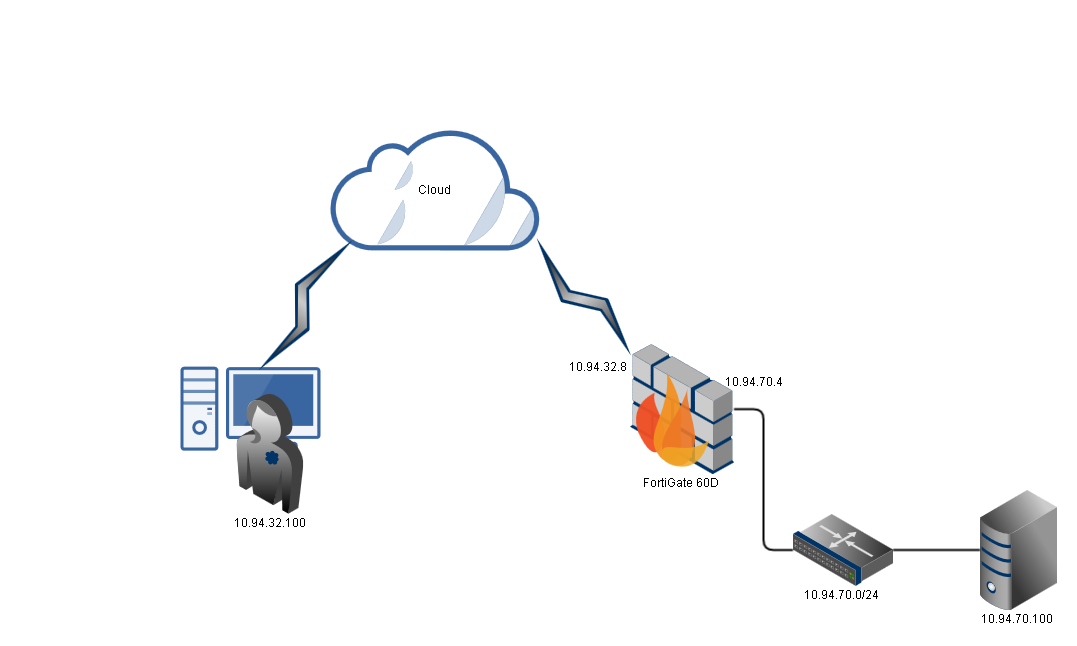
 Lab Topology:


Configuration Steps:

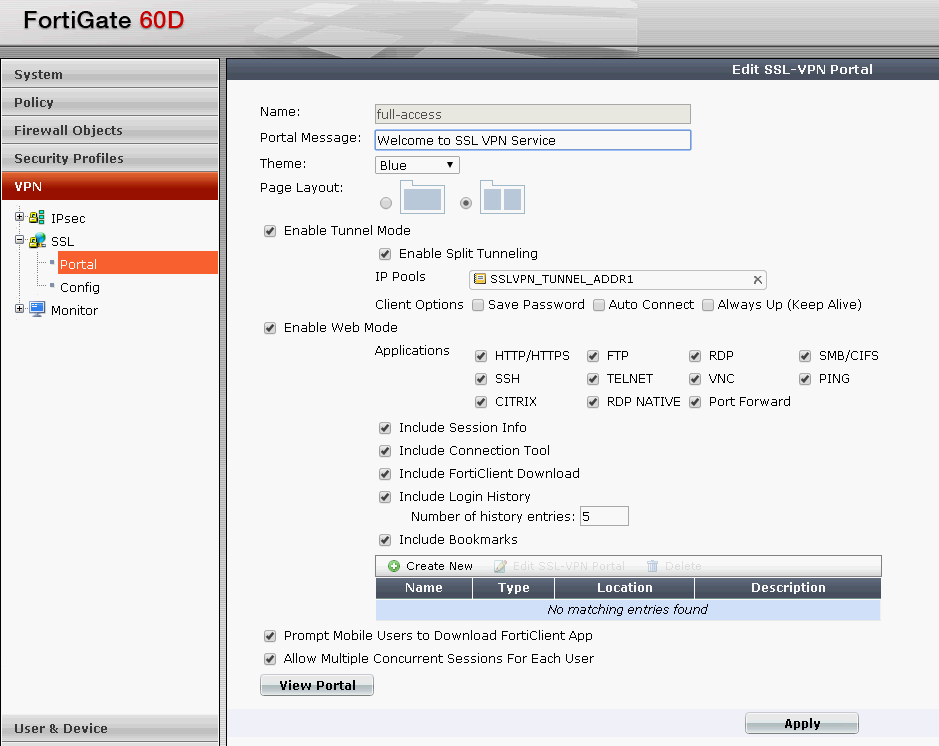
1. Create SSL VPN Portal


 2. Create Remote Users and Groups


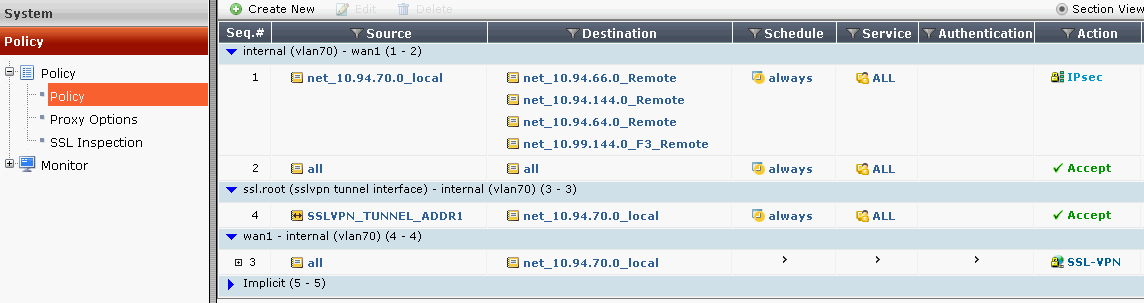
3. Create Security Policies

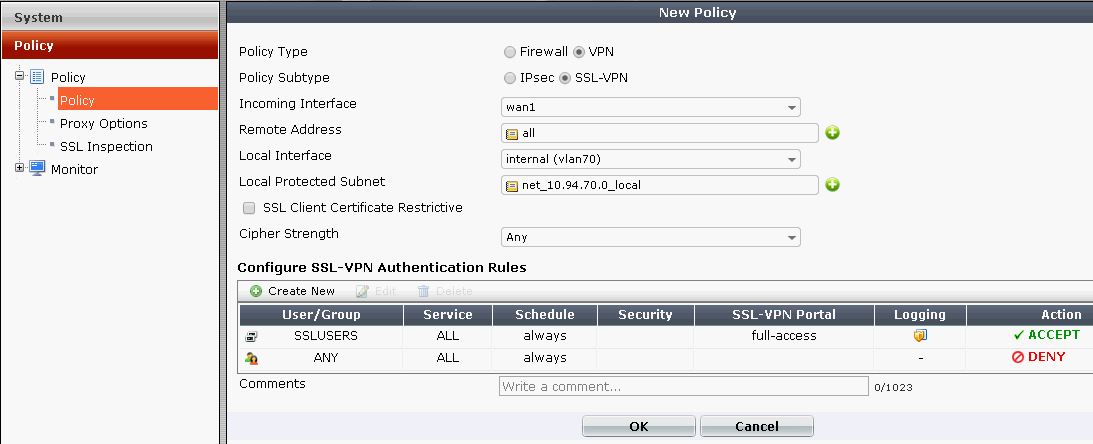
 3.1 SSL-VPN Rule from WAN1 to Internal

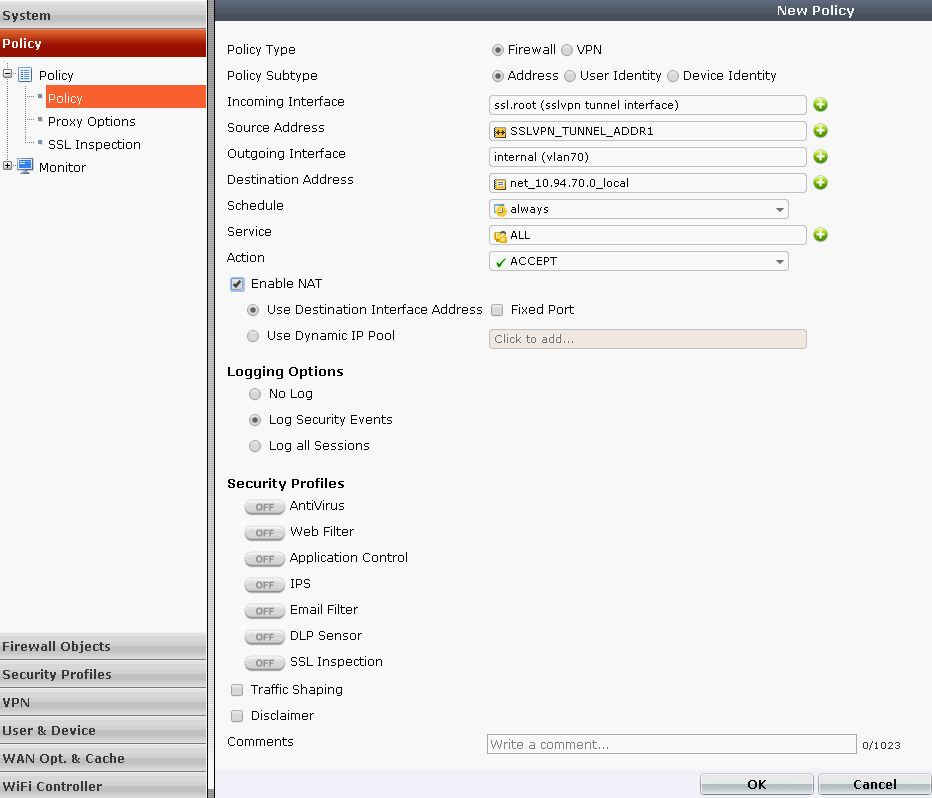
 3.2 Firewall Address Policy from SSL Tunnel Address to Internal


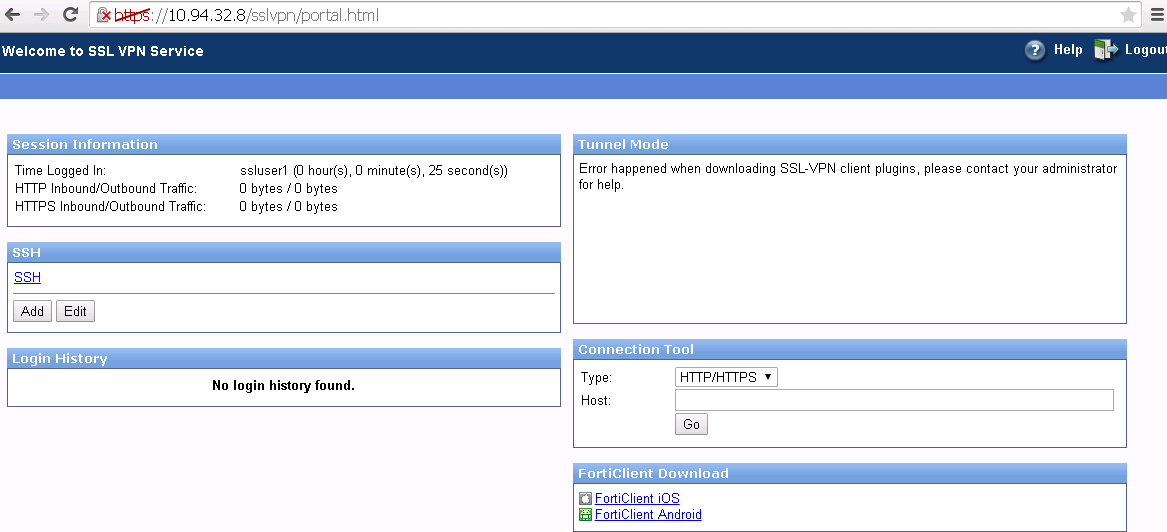
 4. Test


Reference:

  1. FortiOS™ Handbook - SSL VPN (VERSION 5.2.2)
  2. How to setup SSL VPN (Web & Tunnel mode) for remote access
  3. Chapter 16 SSL VPN for FortiOS 5.0
  4. Setup examples : Remote Access with SSLVPN


1 Comment
Jossie Ken link
4/24/2015 04:32:18

great post, keep posting.

Reply


Leave a Reply.

    Categories

    All
    Architecture
    Blog
    Checkpoint
    Cisco
    Cloud
    CyberArk
    F5
    Fortigate
    Guardium
    Juniper
    Linux
    Network
    Others
    Palo Alto
    Qualys
    Raspberry Pi
    Security
    SIEM
    Software
    Vmware
    VPN
    Wireless

    Archives

    March 2024
    February 2024
    January 2024
    December 2023
    November 2023
    October 2023
    September 2023
    August 2023
    July 2023
    June 2023
    May 2023
    April 2023
    March 2023
    February 2023
    January 2023
    December 2022
    November 2022
    October 2022
    September 2022
    August 2022
    July 2022
    June 2022
    May 2022
    April 2022
    March 2022
    February 2022
    January 2022
    December 2021
    November 2021
    October 2021
    September 2021
    August 2021
    July 2021
    June 2021
    May 2021
    April 2021
    March 2021
    February 2021
    January 2021
    December 2020
    November 2020
    October 2020
    September 2020
    August 2020
    July 2020
    October 2019
    September 2019
    June 2019
    July 2018
    May 2018
    December 2017
    August 2017
    April 2017
    March 2017
    January 2017
    December 2016
    November 2016
    October 2016
    September 2016
    August 2016
    July 2016
    June 2016
    May 2016
    April 2016
    March 2016
    February 2016
    January 2016
    December 2015
    November 2015
    October 2015
    September 2015
    August 2015
    July 2015
    June 2015
    May 2015
    April 2015
    March 2015

    Print Page:

    RSS Feed

    Email Subscribe
Powered by Create your own unique website with customizable templates.
  • Blog
  • Sitemap
    • Categories
  • Contact
  • About
  • Resources
  • Tools
  • 51sec.org