
Info Security Memo
  • Blog
  • Sitemap
    • Categories
  • Contact
  • About
  • Resources
  • Tools
  • 51sec.org

Build Confidence

Focusing on Information Security 

Info Security Notes

Ubuntu Basic System and Service Configuration Commands

10/27/2019

0 Comments


1. Update / Upgrade Commands
  • sudo apt-get update : In a nutshell, apt-get update doesn't actually install new versions of software. Instead, it updates the package lists for upgrades for packages that need upgrading, as well as new packages that have just come to the repositories.
  • sudo apt-get upgrade : will fetch new versions of packages existing on the machine if APT knows about these new versions by way of apt-get update. An update must be performed first so that apt-get knows that new versions of packages are available.
  • sudo apt-get dist-upgrade: will do the same job which is done by apt-get upgrade, plus it will also intelligently handle the dependencies, so it might remove obsolete packages or add new ones. 

Note: we can combine commands with && signs, such as:
  • sudo apt-get update && sudo apt-get dist-upgrade


Read More
0 Comments

Kali Usage Tips and Tricks

9/2/2019

0 Comments

 
Kali Linux is a Debian-based Linux distribution aimed at advanced Penetration Testing and Security Auditing. Kali contains several hundred tools which are geared towards various information security tasks, such as Penetration Testing, Security research, Computer Forensics and Reverse Engineering.

Download Kali: https://www.kali.org/downloads/

Basic Configuration Videos:


Read More
0 Comments

CentOS Basic Configuration and Services/Software Installation (Docker, Vsftp, Samba, etc)

9/2/2019

0 Comments

 
The CentOS (Community Enterprise Operating System) Project is a community-driven free software effort focused on delivering a robust open source ecosystem. For users, CentOS offers a consistent manageable platform that suits a wide variety of deployments. For open source communities, CentOS offers a solid, predictable base to build upon, along with extensive resources to build, test, release, and maintain their code.

CentOS uses the Red Hat source code base to create a product similar to RHEL. So CentOS is very close to being RHEL without the branding and support. In particular, the library versions are the same, so binaries that work on one will work on the other. The administration tools are the same and configured in similar ways. However, there are a few differences, as the two distributions sometimes apply different minor patches.


Read More
0 Comments

Ubuntu 16.04.5 LTS (Xenial Xerus) Installation Step by Step in VMWare Workstation (Not Easy Installation)

6/16/2019

0 Comments


1. Ubuntu16.04 Installation
1.1 VMware Workstation Virtual Machine Creation for not easy installation
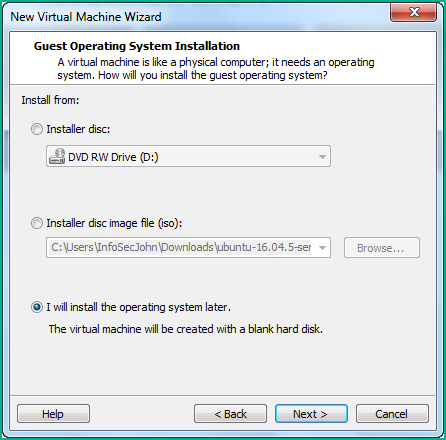
If you are using VMware workstation , by default, system will do easy installation for you, which means all settings will be automatically entered by VMware Workstation. You wont need to provide too much or any information during installation process. We are not going to use this method in this post. We just choose  the option "I will install the operating system later" to skip easy installation.

YouTube Video:
Easy Install vs Non Easy Install


Read More
0 Comments

LAMP and WordPress with HTTPS Certification Cloud Installation on Ubuntu

5/26/2018

0 Comments

 
I have selected Ubuntu as OS platform to install my php, wordpress and mysql. It gave me lots of learning experience on Linux. Here is many steps I recorded during working on my 51sec.org blog site.

For Windows: WAMP and Wordpress Install on AWS Free Tier Windows 2012 R2
For Ubuntu: LAMP and WordPress Installation on Ubuntu

1. Basic Ubuntu Configuration (Not in Cloud)
1.1 Configure Interfaces

Welcome to Ubuntu 15.10 (GNU/Linux 4.2.0-16-generic x86_64)

 * Documentation:  https://help.ubuntu.com/

48 packages can be updated.
37 updates are security updates.

Last login: Sat Feb 13 20:16:03 2016 from 192.168.2.62
john@ubuntu15:~$ cd /etc/network
john@ubuntu15:/etc/network$ sudo vi interfaces
[sudo] password for john: 

# This file describes the network interfaces available on your system
# and how to activate them. For more information, see interfaces(5).

source /etc/network/interfaces.d/*

# The loopback network interface
auto lo
iface lo inet loopback

# The primary network interface -- use DHCP 
auto eth0

iface eth0 inet dhcp

# The secondart network interface -- use static ip address
auto ens160
iface ens160 inet static
address 192.168.2.22
netmask 255.255.255.0
gateway 192.168.2.1
dns-nameserver 8.8.8.8
~

~
john@ubuntu15:/etc/network$sudo /etc/init.d/networking restart


Read More
0 Comments

Basic Linux Commands (Tips and Tricks)

5/26/2018

0 Comments


1. Basic Commands

man : manual
ls :List Directory Contents
pwd :print working directory
cd :change directory
mkdir :Make directory
cp :Copy
mv :Move
find and locate and whereis
kill

Read More
0 Comments

Raspberry Pi 2 Model B Basic Configuration  Part 2

10/8/2015

0 Comments

 
This is the second post regarding basic configuration of Raspberry Pi 2.

  • Raspberry Pi 2 Model B Basic Configuration 1
  • Raspberry Pi 2 Model B Basic Configuration 2

1. Timezone change

By default, Raspberry Pi 2 will use UTC time. Command tzselect will give you continent and country selection to pick.
pi@raspberrypi ~ $ date
Tue Oct  6 13:48:38 UTC 2015
pi@raspberrypi ~ $ tzselect
Please identify a location so that time zone rules can be set correctly.
Please select a continent or ocean.
 1) Africa
 2) Americas
 3) Antarctica
 4) Arctic Ocean
 5) Asia
 6) Atlantic Ocean
 7) Australia
 8) Europe
 9) Indian Ocean
10) Pacific Ocean
11) none - I want to specify the time zone using the Posix TZ format


pi@raspberrypi ~ $ tzconfig
WARNING: the tzconfig command is deprecated, please use:
 dpkg-reconfigure tzdata
pi@raspberrypi ~ $ dpkg-reconfigure tzdata
/usr/sbin/dpkg-reconfigure must be run as root
pi@raspberrypi ~ $ sudo dpkg-reconfigure tzdata


Current default time zone: 'America/Toronto'
Local time is now:      Tue Oct  6 10:55:18 EDT 2015.
Universal Time is now:  Tue Oct  6 14:55:18 UTC 2015.

pi@raspberrypi ~ $ date
Tue Oct  6 10:55:28 EDT 2015


2. Access the Raspberry Pi Desktop


XRDP service will allow you to use remote desktop to access Raspberry Pi GUI through VNC service.


pi@raspberrypi ~ $ sudo apt-get install xrdp
Reading package lists... Done
Building dependency tree    
Reading state information... Done
The following extra packages will be installed:
  tightvncserver xfonts-base
Suggested packages:
  tightvnc-java
The following NEW packages will be installed:
  tightvncserver xfonts-base xrdp
0 upgraded, 3 newly installed, 0 to remove and 0 not upgraded.
Need to get 7,219 kB of archives.
After this operation, 11.5 MB of additional disk space will be used.
Do you want to continue [Y/n]? y
Get:1 http://mirrordirector.raspbian.org/raspbian/ wheezy/main tightvncserver armhf 1.3.9-6.4 [786 kB]
Get:2 http://mirrordirector.raspbian.org/raspbian/ wheezy/main xfonts-base all 1:1.0.3 [6,181 kB]
Get:3 http://mirrordirector.raspbian.org/raspbian/ wheezy/main xrdp armhf 0.5.0-2 [252 kB]
Fetched 7,219 kB in 14s (493 kB/s)                                                    
Selecting previously unselected package tightvncserver.
(Reading database ... 76938 files and directories currently installed.)
Unpacking tightvncserver (from .../tightvncserver_1.3.9-6.4_armhf.deb) ...
Selecting previously unselected package xfonts-base.
Unpacking xfonts-base (from .../xfonts-base_1%3a1.0.3_all.deb) ...
Selecting previously unselected package xrdp.
Unpacking xrdp (from .../xrdp_0.5.0-2_armhf.deb) ...
Processing triggers for man-db ...
Processing triggers for fontconfig ...
Setting up tightvncserver (1.3.9-6.4) ...
update-alternatives: using /usr/bin/tightvncserver to provide /usr/bin/vncserver (vncserver) in auto mode
update-alternatives: using /usr/bin/Xtightvnc to provide /usr/bin/Xvnc (Xvnc) in auto mode
update-alternatives: using /usr/bin/tightvncpasswd to provide /usr/bin/vncpasswd (vncpasswd) in auto mode
Setting up xfonts-base (1:1.0.3) ...
Setting up xrdp (0.5.0-2) ...
[....] Generating xrdp RSA keys......
Generating 512 bit rsa key...

ssl_gen_key_xrdp1 ok

saving to /etc/xrdp/rsakeys.ini

done (done).
[....] Starting Remote Desktop Protocol server : xrdp sesman.
pi@raspberrypi ~ $


3. List System Information


pi@raspberrypi ~ $ uname -a
Linux raspberrypi 3.18.7-v7+ #755 SMP PREEMPT Thu Feb 12 17:20:48 GMT 2015 armv7l GNU/Linux

4. Add Cron Job

Add a cron job to halt Raspberry Pi at 23:00 everyday.
pi@raspberrypi ~ $ crontab -e

  GNU nano 2.2.6           File: /tmp/crontab.obWc51/crontab                          

# Edit this file to introduce tasks to be run by cron.
#
# Each task to run has to be defined through a single line
# indicating with different fields when the task will be run
# and what command to run for the task
#
# To define the time you can provide concrete values for
# minute (m), hour (h), day of month (dom), month (mon),
# and day of week (dow) or use '*' in these fields (for 'any').#
# Notice that tasks will be started based on the cron's system
# daemon's notion of time and timezones.
#
# Output of the crontab jobs (including errors) is sent through
# email to the user the crontab file belongs to (unless redirected).
#
# For example, you can run a backup of all your user accounts
# at 5 a.m every week with:
# 0 5 * * 1 tar -zcf /var/backups/home.tgz /home/
#
# For more information see the manual pages of crontab(5) and cron(8)
#
# m h  dom mon dow   command
0 23 * * * sudo halt


                                   [ Wrote 24 lines ]

crontab: installing new crontab


0 Comments

Raspberry Pi 2 Model B Basic Configuration Part 1

10/6/2015

0 Comments

 
The Raspberry Pi is a credit-card sized general purpose Linux computer designed and manufactured by the Raspberry Pi Foundation, a non-profit organization dedicated to making computers and programming instruction as accessible as possible to the widest number of people. Just recently I installed at home to play with it. There are already lots of resources available from Internet. This post and others are used to record all steps I did for making it useful to my daily work.
  • Raspberry Pi 2 Model B Basic Configuration 1
  • Raspberry Pi 2 Model B Basic Configuration 2

1. Install Raspberry Pi Software

After you hooked up power cable, HDMI cable, mouse and keyboard, you will see the following screen:
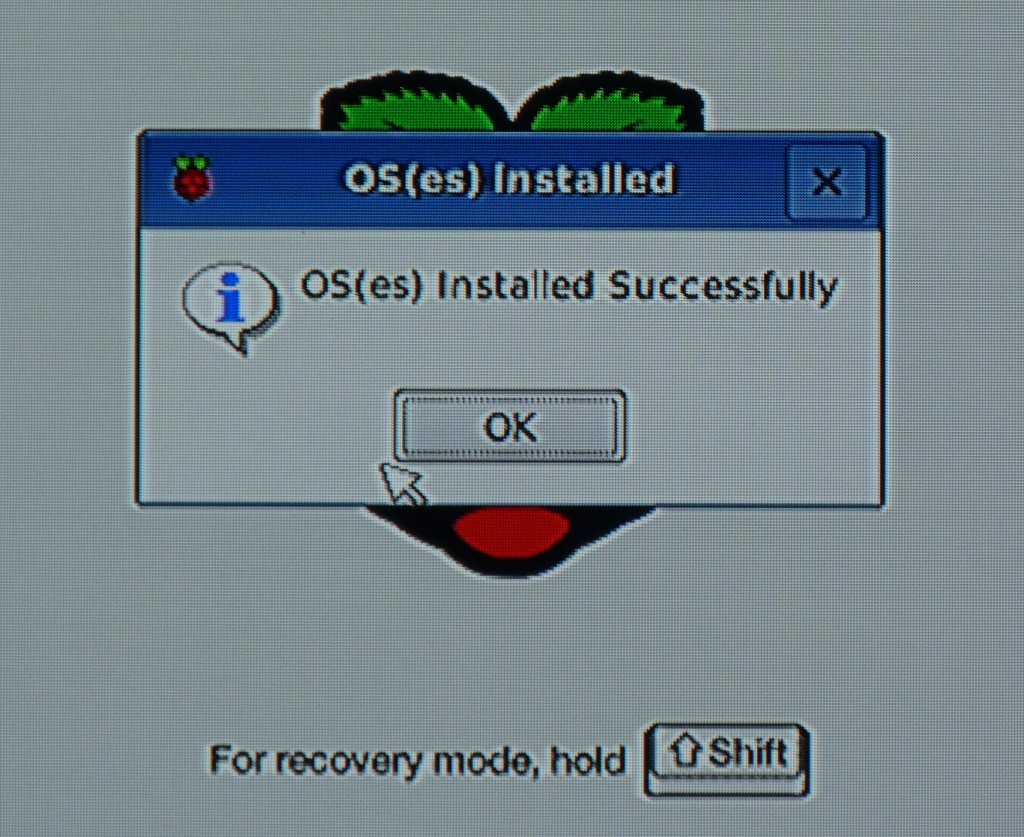
Choose Raspbian [RECOMMENDED] then click Install  on the right top corner. After around 25 minutes, OS will be installed successfully.


2. Run Raspberry Pi Software Configuration Tool

After you installed OS, the first time system will show you Raspberry Pi Software Configuration Tool to do some basic configuration such as change password, enable camera, etc.
The Raspberry Pi Software Configuration Tool
Also you can run the Raspberry Pi Software Configuration Tool whenever you want by running the following command after you logged into device:

sudo raspi-config


During installation, the screen will notify you, by default, the user name is pi and password is raspberry.


2. Enable SSH

From Raspberry Pi Software Configuration Tools Setup Option 8 Advanced Options:


After enabled SSH, you should be able to use SecreCRT or Putty this kind of tool to access it remotely. 

3. Enable Wireless

My package has a usb wireless card. Followed instruction below, I was able to enable it.

From SSH session, you can check your network configuration:

Linux raspberrypi 3.18.7-v7+ #755 SMP PREEMPT Thu Feb 12 17:20:48 GMT 2015 armv7l

The programs included with the Debian GNU/Linux system are free software;
the exact distribution terms for each program are described in the
individual files in /usr/share/doc/*/copyright.

Debian GNU/Linux comes with ABSOLUTELY NO WARRANTY, to the extent
permitted by applicable law.
Last login: Mon Oct  5 00:54:54 2015 from 192.168.2.216
pi@raspberrypi ~ $ ifconfig


To scan for WiFi networks, use the command

pi@raspberrypi ~ $ sudo iwlist wlan0 scan
wlan0     Scan completed :
          Cell 01 - Address: C4:09:38:70:BB:DE
                    ESSID:"Bobby"
                    Protocol:IEEE 802.11bgn
                    Mode:Master
                    Frequency:2.437 GHz (Channel 6)
                    Encryption key:on
                    Bit Rates:144 Mb/s
                    Extra:wpa_ie=dd1c0050f20101000050f20202000050f2040050f20201000050f2020c00
                    IE: WPA Version 1
                        Group Cipher : TKIP
                        Pairwise Ciphers (2) : CCMP TKIP
                        Authentication Suites (1) : PSK
                    Extra:rsn_ie=30180100000fac020200000fac04000fac020100000fac020c00
                    IE: IEEE 802.11i/WPA2 Version 1
                        Group Cipher : TKIP
                        Pairwise Ciphers (2) : CCMP TKIP
                        Authentication Suites (1) : PSK
                    Quality=100/100  Signal level=100/100
          Cell 02 - Address: 84:94:8C:91:1D:28
                    ESSID:"Rogers02520"
                    Protocol:IEEE 802.11bgn
                    Mode:Master
                    Frequency:2.422 GHz (Channel 3)
                    Encryption key:on
                    Bit Rates:300 Mb/s
                    Extra:wpa_ie=dd1a0050f20101000050f20202000050f2020050f20401000050f202
                    IE: WPA Version 1
                        Group Cipher : TKIP
                        Pairwise Ciphers (2) : TKIP CCMP
                        Authentication Suites (1) : PSK
                    Extra:rsn_ie=30180100000fac020200000fac02000fac040100000fac020000
                    IE: IEEE 802.11i/WPA2 Version 1
                        Group Cipher : TKIP
                        Pairwise Ciphers (2) : TKIP CCMP
                        Authentication Suites (1) : PSK
                    IE: Unknown: DD270050F204104A000110104400010210470010BC329E00F1DD7F11B2F8600F84948C91103C000101
                    Quality=0/100  Signal level=42/100
          Cell 03 - Address: 84:94:8C:C3:73:E8
                    ESSID:"SnowWhite"
                    Protocol:IEEE 802.11bgn
                    Mode:Master
                    Frequency:2.412 GHz (Channel 1)
                    Encryption key:on
                    Bit Rates:300 Mb/s
                    Extra:rsn_ie=30180100000fac020200000fac02000fac040100000fac020000
                    IE: IEEE 802.11i/WPA2 Version 1
                        Group Cipher : TKIP
                        Pairwise Ciphers (2) : TKIP CCMP
                        Authentication Suites (1) : PSK
                    IE: Unknown: DD270050F204104A000110104400010210470010BC329E00F1DD7F11B2F8600F84948CC3103C000101
                    Quality=81/100  Signal level=44/100  

Adding your scanned wireless information to Raspberry Pi

Open the wpa-supplicant configuration file in nano:

sudo nano /etc/wpa_supplicant/wpa_supplicant.conf

Go to the bottom of the file and add the following:

network={
    ssid="Bobby"
    psk="password12345"
}

In a couple of seconds, your Pi will join into SSID you entered and got the ip address


pi@raspberrypi ~ $ ifconfig
eth0      Link encap:Ethernet  HWaddr b8:27:eb:1c:f4:ae
          UP BROADCAST MULTICAST  MTU:1500  Metric:1
          RX packets:0 errors:0 dropped:0 overruns:0 frame:0
          TX packets:0 errors:0 dropped:0 overruns:0 carrier:0
          collisions:0 txqueuelen:1000
          RX bytes:0 (0.0 B)  TX bytes:0 (0.0 B)

lo        Link encap:Local Loopback
          inet addr:127.0.0.1  Mask:255.0.0.0
          UP LOOPBACK RUNNING  MTU:65536  Metric:1
          RX packets:8 errors:0 dropped:0 overruns:0 frame:0
          TX packets:8 errors:0 dropped:0 overruns:0 carrier:0
          collisions:0 txqueuelen:0
          RX bytes:1104 (1.0 KiB)  TX bytes:1104 (1.0 KiB)

wlan0     Link encap:Ethernet  HWaddr 74:da:38:41:33:35
          inet addr:192.168.2.218  Bcast:192.168.2.255  Mask:255.255.255.0
          UP BROADCAST RUNNING MULTICAST  MTU:1500  Metric:1
          RX packets:3767 errors:0 dropped:10 overruns:0 frame:0
          TX packets:816 errors:0 dropped:0 overruns:0 carrier:0
          collisions:0 txqueuelen:1000
          RX bytes:553750 (540.7 KiB)  TX bytes:222808 (217.5 KiB)


4. Assign Static IP Address:


pi@raspberrypi ~ $sudo nano /etc/network/interfaces


auto lo

iface lo inet loopback
iface eth0 inet dhcp

allow-hotplug wlan0
iface wlan0 inet manual
wpa-roam /etc/wpa_supplicant/wpa_supplicant.conf
iface default inet static
address 192.168.2.250
netmask 255.255.255.0
network 192.168.2.0
broadcast 192.168.2.255
gateway 192.168.2.1


5. Internet Remote Access Service - Weaved


pi@raspberrypi ~ $ wget https://github.com/weaved/installer/raw/master/binaries/weaved-nixinstaller_1.2.13.bin
--2015-10-06 12:45:16--  https://github.com/weaved/installer/raw/master/binaries/weaved-nixinstaller_1.2.13.bin
Resolving github.com (github.com)... 192.30.252.129
Connecting to github.com (github.com)|192.30.252.129|:443... connected.
HTTP request sent, awaiting response... 302 Found
Location: https://raw.githubusercontent.com/weaved/installer/master/binaries/weaved-nixinstaller_1.2.13.bin [following]
--2015-10-06 12:45:19--  https://raw.githubusercontent.com/weaved/installer/master/binaries/weaved-nixinstaller_1.2.13.bin
Resolving raw.githubusercontent.com (raw.githubusercontent.com)... 199.27.76.133
Connecting to raw.githubusercontent.com (raw.githubusercontent.com)|199.27.76.133|:443... connected.
HTTP request sent, awaiting response... 200 OK
Length: 303036 (296K) [application/octet-stream]
Saving to: `weaved-nixinstaller_1.2.13.bin'

100%[=============================>] 303,036      665K/s   in 0.4s  

2015-10-06 12:45:23 (665 KB/s) - `weaved-nixinstaller_1.2.13.bin' saved [303036/303036]

pi@raspberrypi ~ $ chmod +x weaved-nixinstaller_1.2.13.bin
pi@raspberrypi ~ $ ./weaved-nixinstaller_1.2.13.bin
Extracting Weaved Software into /home/pi
Finished extracting

You are running installer script Version: v1.2.13
Last modified on February 26, 2015, by Mike Young.

Now launching the Weaved connectd daemon installer...
.
We have detected an arm7l processor.
Is this a Raspberry Pi 2? [y/n] y
Detected platform type: pi
Using /var/log/syslog for your log file

Checking for compatibility with Weaved's network...

Checking if DNS works ... .[OK]

Checking TCP connectivity to weaved.com...<oip=192.168.2.250> [OK]

Send to 174.36.235.146:5960 [] [mip=216.165.201.211] [oport=59612 mport=59612] [no remap] [preserve port] [OK]

Congratulations! Your network is compatible with Weaved services.


*********** Protocol Selection Menu ***********
*                                             *
*    1) SSH on default port 22                *
*    2) Web (HTTP) on default port 80         *
*    3) WebIOPi on default port 8000          *
*    4) VNC on default port 5901              *
*    5) Custom (TCP)                          *
*                                             *
***********************************************

Please select from the above options (1-5):
1
You have selected: 1.

The default port for SSH is 22.
Would you like to continue with the default port assignment? [y/n] y
We will install Weaved services for the following:

Protocol: ssh
Port #: 22
Service name: Weavedssh22


Please enter your Weaved Username (email address):
[email protected]

Now, please enter your password:
Copied notify.sh to /usr/bin
Copied notify_Weavedssh22.sh to /usr/bin
Copied weavedConnectd to /usr/bin
startweaved.sh copied to /usr/bin
no crontab for root
no crontab for root


Your device UID has been successfully provisioned as: 80:00:00:05:46:00:52:0F.

Pre-registration of UID: 80:00:00:05:46:00:52:0F successful.


We will now register your device with the Weaved backend services.
Please provide an alias for your device:
jrasp
Your device will be called jrasp.

Registering Weaved services for Weavedssh22 ................


Starting Weavedssh22...
WeavedConnectd built Feb 26 2015 at 10:53:39 Now Starting Up
   Version 2.11 - (c)2015 Weaved, Inc. All Rights Reserved
   Built with UPNP NATPMP ALIGN BCASTER MALLOC_POOL LINUX RESOLVE BIGBUF pool=262144
   Weaved Development Kit Version based on    Rasberry Pi Version
config file /etc/weaved/services/Weavedssh22.conf
Starting up as daemon
PID file specifed as /var/run/Weavedssh22.pid
setting web config port to dest_server_port 80


**************************************************************************
CONGRATULATIONS! You are now registered with Weaved.
Your registration information is as follows:

Device alias:
jrasp

Device UID:
80:00:00:05:46:00:52:0F

Device secret:


The alias, Device UID and Device secret are kept in the License File:
/etc/weaved/services/Weavedssh22.conf

If you delete this License File, you will have to re-run the installer.

**************************************************************************


Starting and stopping your service can be done by typing:
"sudo /usr/bin/Weavedssh22.sh start|stop|restart"
pi@raspberrypi ~ $


By click your device name, Weaved website will give you a new host name and ports for you to do remote connection from anywhere on Internet.


Reference:

Installation Instructions for Raspberry Pi
How to Configure Your Raspberry Pi for Remote Shell, Desktop, and File Transfer
VNC (VIRTUAL NETWORK COMPUTING)


0 Comments

    Categories

    All
    Architecture
    Blog
    Checkpoint
    Cisco
    Cloud
    CyberArk
    F5
    Fortigate
    Guardium
    Juniper
    Linux
    Network
    Others
    Palo Alto
    Qualys
    Raspberry Pi
    Security
    SIEM
    Software
    Vmware
    VPN
    Wireless

    Archives

    March 2024
    February 2024
    January 2024
    December 2023
    November 2023
    October 2023
    September 2023
    August 2023
    July 2023
    June 2023
    May 2023
    April 2023
    March 2023
    February 2023
    January 2023
    December 2022
    November 2022
    October 2022
    September 2022
    August 2022
    July 2022
    June 2022
    May 2022
    April 2022
    March 2022
    February 2022
    January 2022
    December 2021
    November 2021
    October 2021
    September 2021
    August 2021
    July 2021
    June 2021
    May 2021
    April 2021
    March 2021
    February 2021
    January 2021
    December 2020
    November 2020
    October 2020
    September 2020
    August 2020
    July 2020
    October 2019
    September 2019
    June 2019
    July 2018
    May 2018
    December 2017
    August 2017
    April 2017
    March 2017
    January 2017
    December 2016
    November 2016
    October 2016
    September 2016
    August 2016
    July 2016
    June 2016
    May 2016
    April 2016
    March 2016
    February 2016
    January 2016
    December 2015
    November 2015
    October 2015
    September 2015
    August 2015
    July 2015
    June 2015
    May 2015
    April 2015
    March 2015

    Print Page:

    RSS Feed

    Email Subscribe
Powered by Create your own unique website with customizable templates.
  • Blog
  • Sitemap
    • Categories
  • Contact
  • About
  • Resources
  • Tools
  • 51sec.org